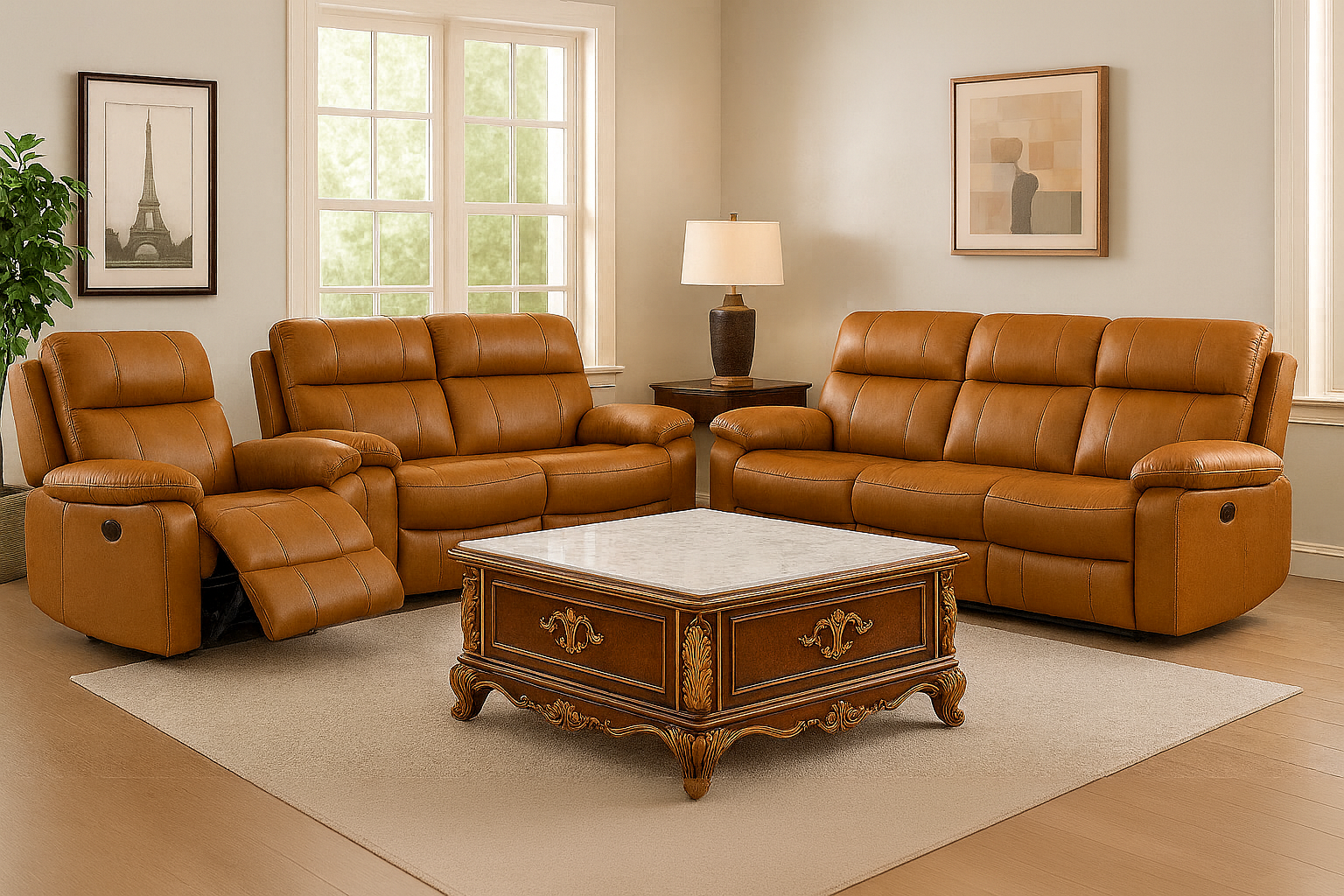
“Are recliners good or bad for your back?” is one of the most common questions we hear. The honest answer: a well-designed, well-fitted recliner can genuinely help your spine — and the wrong one, used the wrong way, can hurt it. Here is how a recliner helps or hurts your back, and what genuinely matters, from the team that has installed 10,000+ recliners across 18+ cities in India.
A note before we start: this is general comfort guidance, not medical advice. Who should be careful — if you have a diagnosed back condition, sciatica, disc problems or post-surgical restrictions, please consult a doctor or physiotherapist before making seating decisions or spending long periods reclined.
Quick Answers
Are recliners good or bad for your back?
Good when they support a neutral spine — a recliner that reclines the back and lifts the legs takes pressure off the lower spine. Motorized lumbar support helps most.
Which recliner is best for back pain?
A motorized recliner with adjustable lumbar support and a zero-gravity position (dual-motor) is best for back comfort.
Are recliners safe for elderly or pregnant users?
Yes — motorized recline is the easiest and safest to operate, with effortless positioning at a button press.
Why upright sitting is hard on the lower back
Sitting straight up for long stretches concentrates load on the lumbar discs and the muscles around them. Without support behind the lower back, the spine tends to round, the pelvis tips, and pressure builds exactly where most people feel end-of-day stiffness. A chair that lets you lean back and shift some of that weight off the spine — while still supporting you — is a large part of why recliners feel so relieving.
The neutral-body (“zero-gravity”) position
The position most people find easiest on the back opens the torso slightly past 90 degrees and raises the legs so the knees sit around — or just above — hip level. Spreading your weight across the backrest and footrest in this way takes pressure off the lumbar spine and lets the muscles relax. A good recliner reaches this position smoothly and, crucially, holds it without you bracing to stay there.
What actually supports you
Three things do the heavy lifting: lumbar support that fills the curve of your lower back, a headrest that meets your neck rather than pushing your head forward, and a footrest that fully supports your calves. On our premium motorized models the headrest and lumbar adjust independently, so you can tune the fit rather than accept a fixed shape.
Getting up should be effortless too
Back comfort is not only about sitting — it is also about rising without a lurch. Pushing up out of a low, soft chair is exactly the movement that aggravates many backs. Motorized recline solves this: a single button eases you upright and forward, so standing takes no strain. This is why we specifically recommend motorized recliners for elderly family members, during pregnancy, and while recovering from surgery or injury. Manual recliners are excellent and more affordable, but the powered sit-to-stand is genuinely kinder to a vulnerable back.
Manual vs motorized for back support
| | Manual recline | Motorized recline |
|---|
| Finding a supportive angle | Set positions via lever | Infinite, precise adjustment |
| Holding the position | Body weight assisted | Powered — no effort to hold |
| Sit-to-stand ease | You push up yourself | Powered lift forward |
| Independent head/lumbar | Usually fixed | Available on premium models |
| Best for | Budget, everyday comfort | Elderly, pregnancy, recovery |
| From (per seat, GST-incl.) | ₹17,999 | ₹26,999 |
How to choose a recliner your back will thank you for
Get the size right. Seat depth should let you sit back fully with support behind your knees; a seat too deep forces you to slump. Because we build to order, the recliner is proportioned to your height rather than an average.
Mind the firmness and foam density. Too soft and you sink out of alignment; too hard and pressure points appear. A firm-but-cushioned seat with high foam density holds you in a supported posture over the long term — foam density is the single biggest predictor of how a recliner ages.
Match the headrest and lumbar. These are what keep the neutral position comfortable. Try to feel the lower-back fill and the neck contact — or ask us to spec adjustable versions.
Keep moving. No single position, however good, should be held for hours. Use the recline to rest and de-load, then get up and move regularly.
Frequently Asked Questions
Are recliners bad for your back?
Not inherently. A supportive recliner used sensibly takes load off the spine and eases many people's backs. Problems come from the wrong recliner — too soft, the wrong size, or no lumbar support — or from staying locked in one position for hours. Choose well and keep moving, and a recliner is far more likely to help than harm.
Can a recliner help with back pain?
A supportive recliner can relieve pressure on the lower back by letting you shift weight off the spine and into a reclined, well-supported position. Many people find it eases everyday stiffness — but a recliner is comfort furniture, not a medical device. If you have a back condition or persistent pain, speak to a doctor or physiotherapist.
What is the best recliner position for your back?
A slightly reclined, neutral-body position — torso open past 90 degrees, knees supported and roughly level with or above the hips — reduces load on the lower spine compared with sitting bolt upright. A footrest and lumbar support help you hold it without effort.
Are motorized recliners better for the back?
They make it easier to find and hold a supportive angle, and to rise without straining. That effortless control is why we recommend motorized recline for elderly users, during pregnancy and while recovering from surgery.
What should I look for in a supportive recliner?
Firm-but-cushioned seating, genuine lumbar support, a headrest that meets your neck, the right seat depth for your height, and a footrest that fully supports your calves. Made-to-order sizing helps you get all of these right.
How long should you sit in a recliner?
As with any seat, movement matters — change position and get up periodically rather than staying reclined for hours. Use the recline to rest and de-load the spine, not to stay fixed in one pose all day.
Want a recliner sized to your back?
Tell us your height, how you like to sit and any comfort concerns — we'll recommend a model and build it to order. We reply within 30 minutes on WhatsApp.